Audeze LCD-5s Review
Long-Term Test
To understand the Audeze LCD-5s, you have to understand the family tree. Audeze helped revive planar magnetic headphones for the modern audiophile era with the LCD-2 in 2009, followed by the LCD-3 and, around 2015, the famously warm and the famously heavy LCD-4. Those headphones built a reputation on a specific character, thick, weighty, and emotionally saturated, that fans simply called the “Audeze sound.” Then in September 2021 the company changed course. The original LCD-5 arrived at $4,500 with a 14 ohm impedance, 90 dB sensitivity, and a svelte 420 grams, roughly a third lighter than the LCD-4. It was about the same time that Ozempic also became popular. Coincidence? You be the judge!
The Audeze LCD-5 abandoned wooden cups, chased low distortion and speed, and deliberately stepped away from that older “Audeze warmth” in favor of a leaner, more clinical accuracy. Users admired its resolution, but a meaningful contingent of longtime fans felt the soul had been engineered out of it.
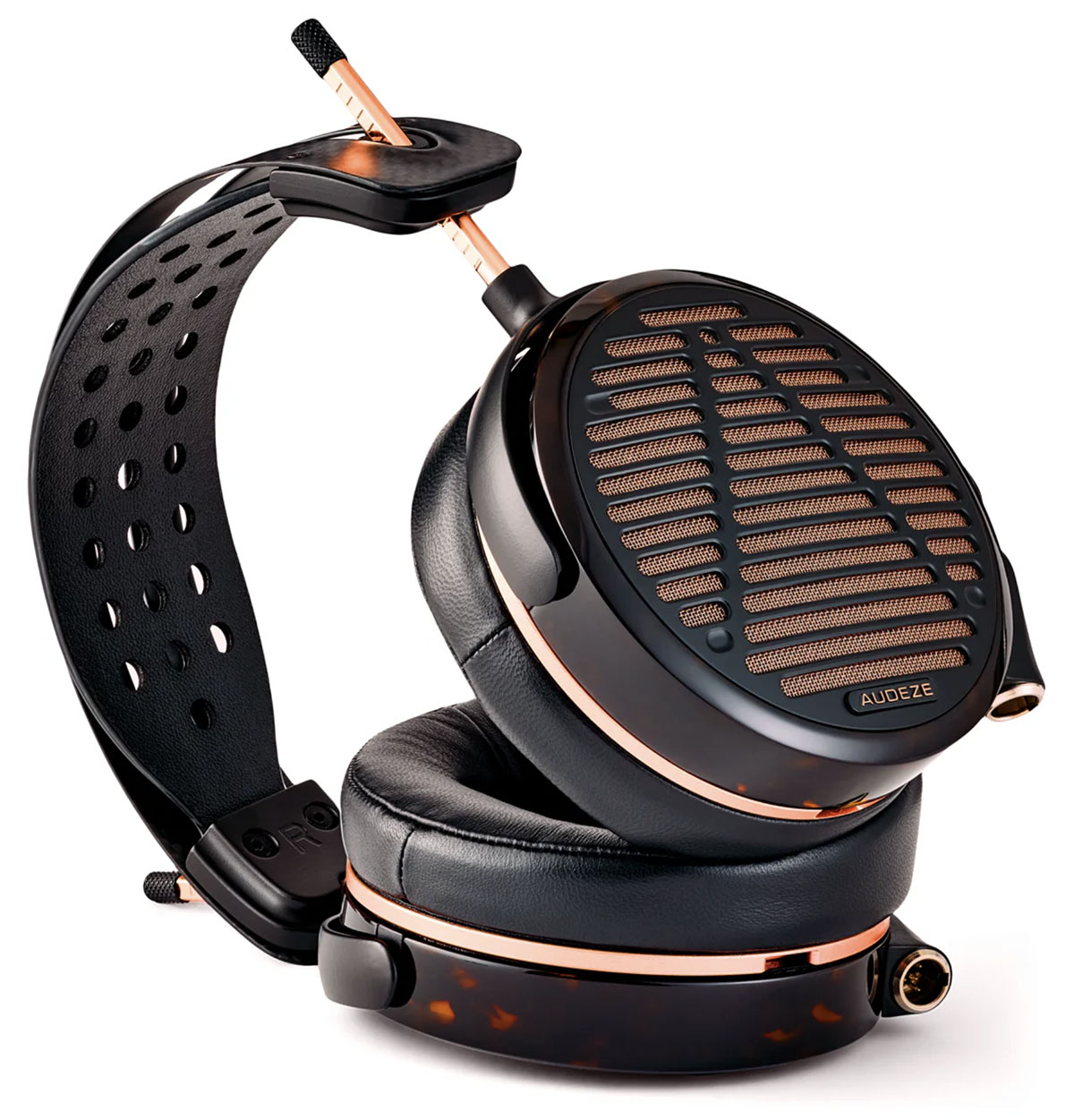
The LCD-5s is Audeze’s answer to that unfavorable reception. The LCD-5s is a full replacement for the LCD-5 rather than a refinement or evolution. The big headline is the addition of SLAM, short for Symmetric Linear Acoustic Modulator, an acoustic technology that debuted on the company’s CRBN2 electrostatic and has since appeared in other models including the LCD-S20 ($499). SLAM lives in a copper-toned ring nestled between the cup and the earpad, where fine physical channels relieve internal pressure and acoustically boost the low frequencies by several decibels without lengthening diaphragm excursion or spiking distortion.
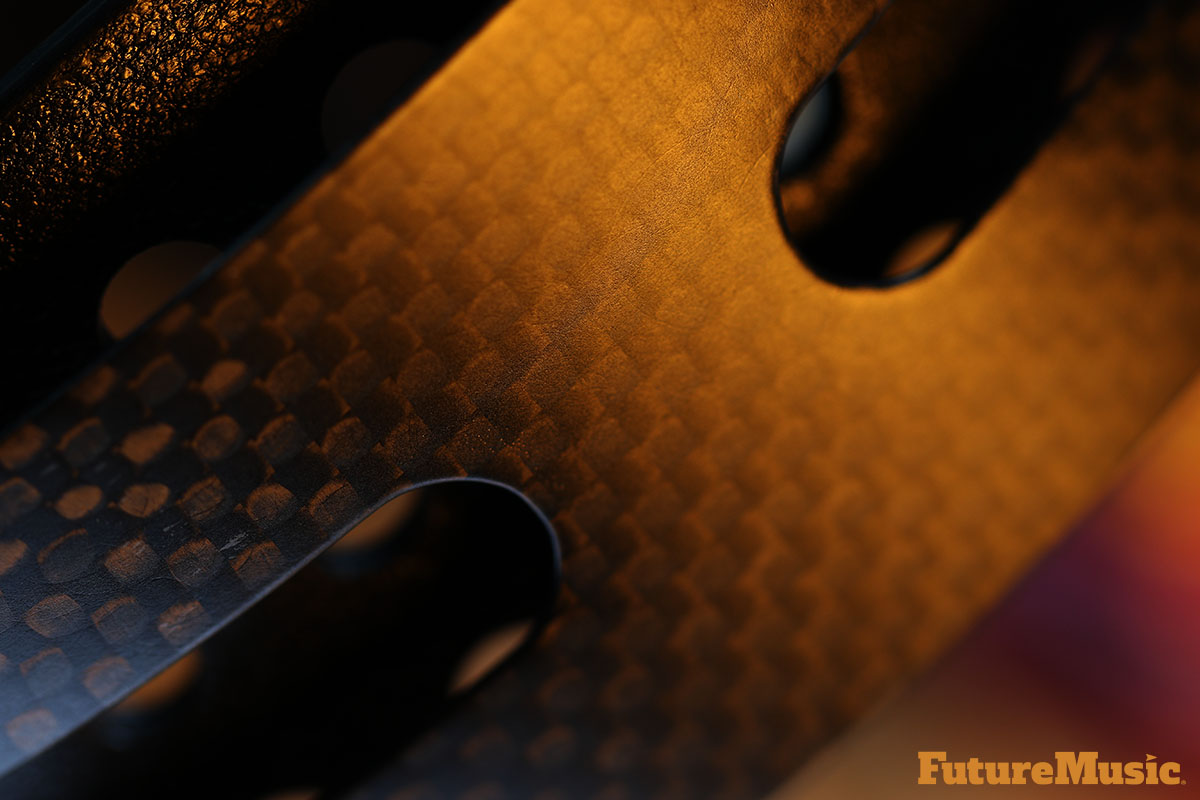
Around that centerpiece, the LCD-5s keeps the proven bones of the LCD-5, a 90 mm nano-scale Parallel Uniforce diaphragm, a single-sided Fluxor array of fourteen Neodymium N50 magnets, and Fazor phase management, while revising the driver chassis to retune the midrange. The frequency response is still rated at 5 Hz to 50 kHz with THD under 0.1 percent at 100 dB and a maximum SPL above 130 dB. Impedance climbs to 35 ohms from the old 14, though sensitivity holds at 90 dB per milliwatt, so it remains easy to drive. The other tangible enhancements are a redesigned, more sculpted earpad geometry aimed at comfort and seal, stronger copper accents over the carbon fiber, magnesium, leather, and acetate construction, and the same balanced OCC copper cable and aluminum travel case as before. Weight, notably, rises to 475 grams from 420.
In our long-term review, we had four reviewers spend considerable time with the LCD-5s in a variety of workflows; their comments are in quotes below.
“Glorious Earpads”
Spend some quality, getting to know you time with the LCD-5s and the first thing that lands is how thoroughly Audeze has addressed the ergonomic complaints that plagued the LCD-5. The new ear pads split the difference between the sharp, sculpted edges of the outgoing model and the softer, rounder geometry of older Audeze designs. The perforated headband distributes weight evenly enough that “the cups seem to rest on your head rather than clamp down on it.” Our evaluators all commented that not only are these “the most comfortable of Audeze’s recent full-size planars,” but they’re “by far” the “most comfortable headphones” that two of our reviewers “have ever worn.” That said, the compression is still on the “firm side out of the box, if you happen to have a larger head,” and at 475 grams this is not a headphone you forget you are wearing the way you might a Susvara. It may not feel weightless, but “once the rods are dialed in” it is “livable for long sessions” and “you won’t notice them.”
Audeze LCD-5s Review
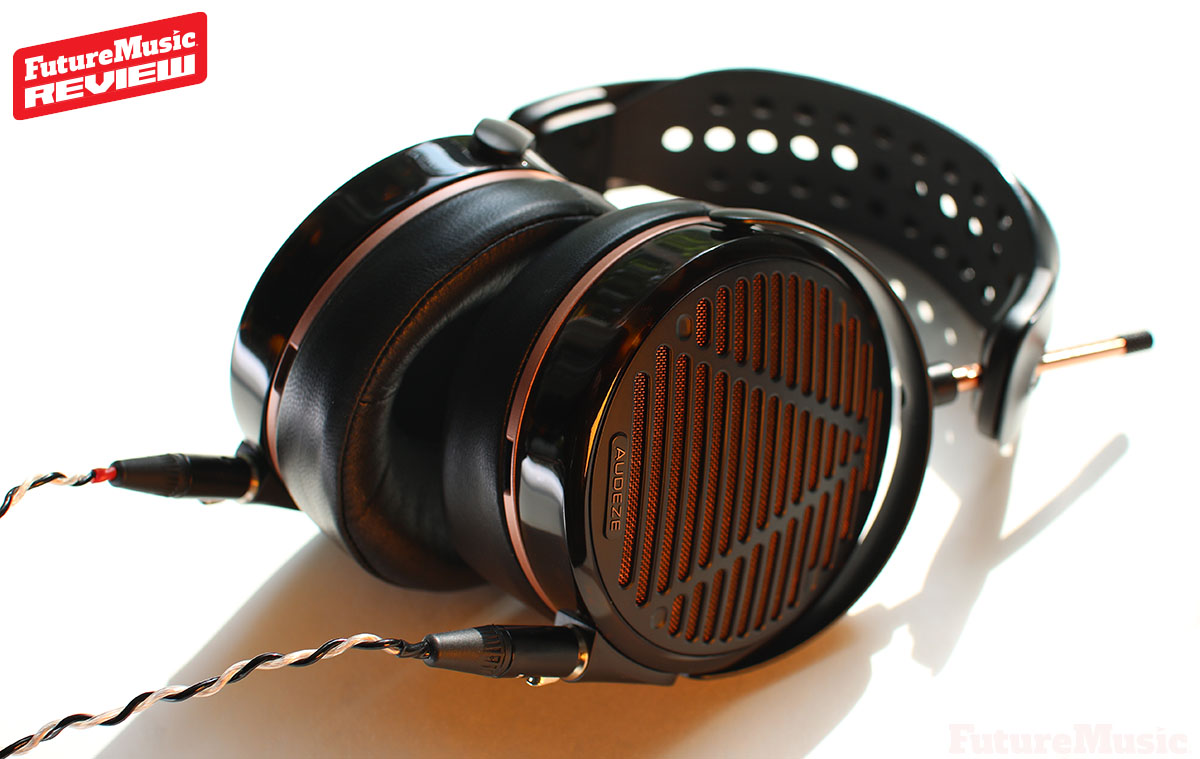
The LCD-5s sound signature is something to note if you utilize these cans to listen or monitor electronic music. Our testers all had positive notes on the low end. “SLAM just works,” commented one reviewer, who was initially skeptical. The “bass is bigger, deeper, and more physical” than the LCD-5’s comparatively “flat and lean presentation, with a clear emphasis on sub-bass rumble and pressurization.” The same reviewer, who used the LCD-5 extensively also remarked that the “trademark Audeze low-end punch” has now “been restored” and praised how the driver “holds composure at high volume without the dynamic compression” and “creeping Zombie distortion” the old model showed when driven hard.
For deep bass aficionados, the “weightier response below 80 Hz” was apparent with a quality headphone amplifieer. The nuance is that the response is “more sub energy” than “chest-thump.” One evaluator felt the mid-bass signature sat comparatively lower than his Sennheiser HD 800 S, showcasing the difference between the “chesty punch that previous LCD models delivered,” and the new bass characteristic, which is “somewhat of a tradeoff for that deep, extended foundation.”
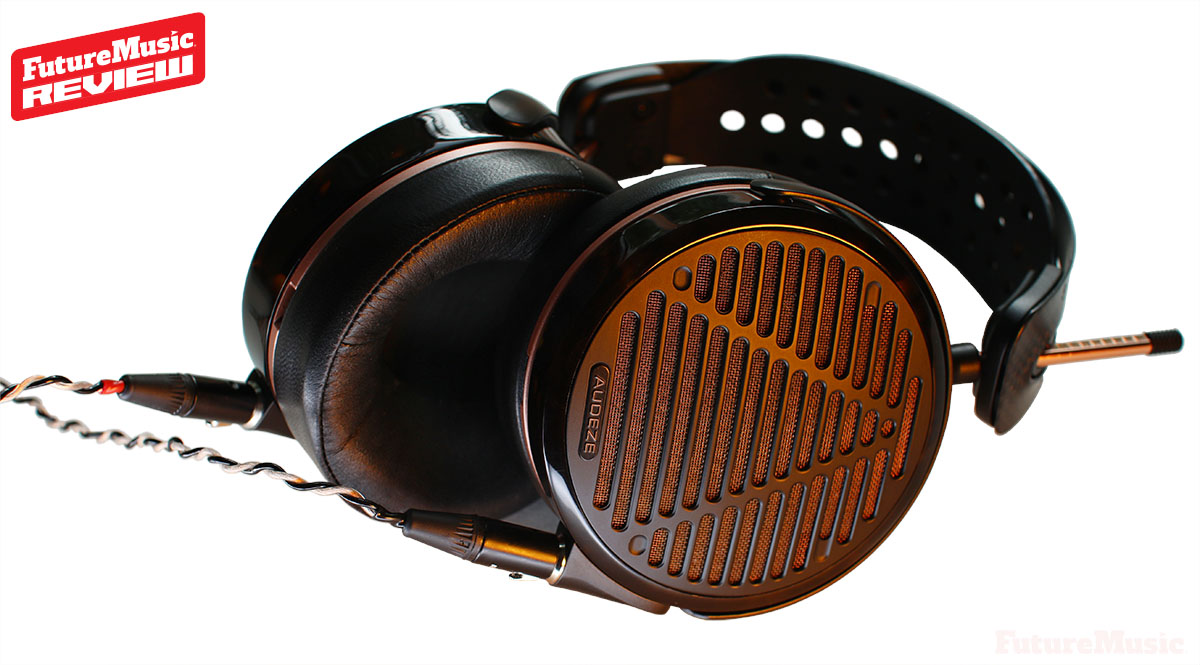
The treble response was universally praised. Compared to the “occasionally hot and fatiguing LCD-5,” the LCD-5s ratchets the presence region down substantially, with a drop of roughly 6 dB in the sensitive 2.5 to 7 kHz band. The result is a “darker, smoother top end” that “never wanders into sibilance or metallic glare.” Our EDM, Techno and Drum ‘n’ Bass evaluators found the “focused treble as a real step forward,” providing “coherent and refined detail” with “proper air and extension.”
There was some discrepancy in the the midrange, and the result was based on the electronic music focus of our testers. For Deep Afro House, the commentary was about the “return to the full, organic, nature midrange” that dogged the LCD-5’s 800 Hz to 1 kHz “drunken stumble.” The “darker mids” and “steady, smooth fatigue-free signature” was touted by our Dub Techno and Techno producer. But our EDM reviewer found that there was “something going on around 1.5 kHz” that was “disconcerning and inaccurate with certain synths.”
The LCD-5s keeps the LCD-5’s lightning-fast, electrostatic-like transient attack and its top-tier resolution, and because the cup dimensions and driver size are unchanged, the soundstage remains intimate and forward. If “a cavernous, out-of-head stage is your priority, the [LCD-5s] is not going to win you over with its spread.” It is easy to drive from a good digital audio player, yet “scales meaningfully” with a powerful, Class A desktop amplifier that “can deliver current on demand.”

The easiest way for electronic musicians to get their music onto Spotify, Apple Music, iTunes, Amazon Music, Tidal, Instagram, Facebook, TikTok, Pandora, Twitch & much more! Click the banner above or the Go Button to save 7% off of your signup! GO!
For all its refinement, the LCD-5s leaves a few clear openings. The most consequential is that lower-midrange voicing. When one of our evaluators hears restored naturalness and another hears a “1960s phone coloration” in roughly the same region. One can either determine that this was an outlier – and why FutureMusic employs multiple testers for a more objective and balanced review – or…the possibility that Audeze tuned the LCD-5s to a strong preference rather than to broad neutrality, and a small dip or a more linear traverse through 1 to 1.5 kHz would likely have widened the headphone’s appeal without sacrificing its character. The second miss is spatial. Audeze carried over the LCD-5’s compact acoustic chamber, so buyers stepping up from that model or cross-shopping the more expansive competition still get a close, forward presentation, and the driver and cup geometry were the obvious place to chase the openness that summit-fi rivals now deliver.
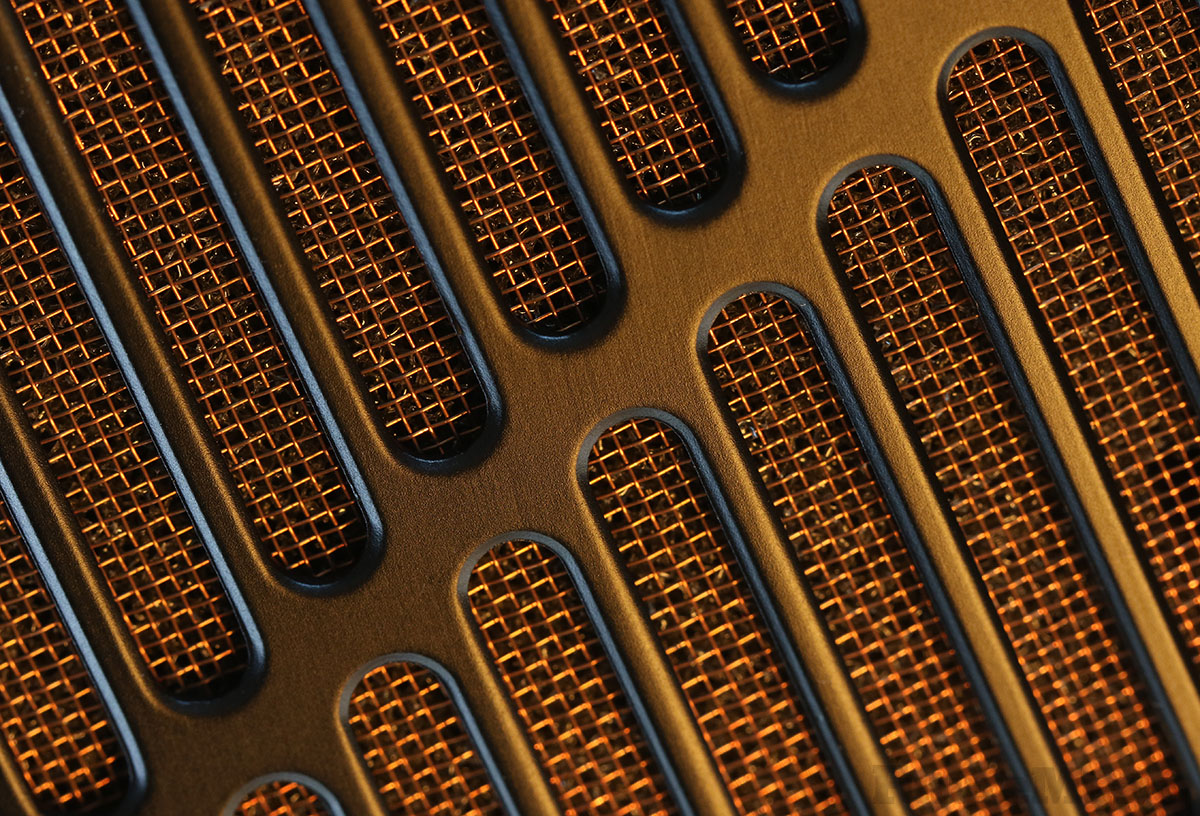
The once-simple owner task of swapping earpads looks likely to become a send-it-in-for-service affair…
Then there is the practical, and here Audeze arguably went backward. Because the pads appear bonded to the SLAM ring, and the ring itself is adhered to the chassis, the once-simple owner task of swapping earpads looks likely to become a send-it-in-for-service affair. On a $4,500 headphone meant to last for years, user-replaceable pads should be table stakes, and a modular, serviceable SLAM ring would fix this cleanly. The weight is a smaller but real regression too. Gaining 55 grams over the LCD-5, presumably from the SLAM ring, thicker connectors, and chassis reinforcement, undercuts one of the LCD-5’s genuine wins, and trimming that back should be on the table. Finally, the accessory bundle feels static for the money. The included cable is functional but “more plasticky than competitors,” the “ceremonial gloves are more theater than utility,” and at this price “a second pad option” to let owners tune comfort and tone, as well as a headphone stand would have been a meaningful and inexpensive additions.
Audeze LCD-5s Features and Specs:
- LCD-5s: Over-ear with open-back
- Transducer type: Planar Magnetic
- Magnetic structure: Fluxor magnet array
- Phase management: Fazor
- Acoustic management: SLAM
- Magnet type: Neodymium N50
- Diaphragm type: Nano-Scale Parallel Uniforce
- Transducer size: 90 mm
- Frequency response: 5Hz – 50kHz
- Maximum SPL: >130dB
- Impedance: 35 ohms
- THD: <0.1% @ 100dB SPL
- Sensitivity: 90dB/1mW (@Drum Reference Point)
- Minimum power requirement: >100mW
- Recommended power level: >500mW
- Maximum power handling: 5W RMS
- Weight: 475g

Read Next: The TRS MIDI Debacle
FutureMusic Special Report: How the music technology industry abandoned 40 years of interoperability, let manufacturers run wild, and turned a simple connector swap into a crisis of confusion, incompatibility, and lost trust… The TRS MIDI Debacle
Conclusion
If you value a weighty, refined, fatigue-free presentation and can live with a close stage and an opinionated midrange, it performs near the top of its class. If you are sensitive to that lower-midrange coloration or crave width, this may not be your ticket to ride. FutureMusic’s rating reflects an outstanding piece of engineering held just short of greatness by a small voicing choice for certain material and a couple of self-inflicted ownership annoyances. Highly Recommended.
Audeze LCD-5s costs $4500 and comes with complete cabling and a carry case.
Price Note: Prices are quoted in US dollars and are different in other countries and geographical locations.
** One size fits most

Cheers:
+ Deeper, weightier, more physical bass thanks to SLAM, with excellent control and no dynamic compression at high volume
+ Smoother, darker, more refined treble that all but eliminates the LCD-5’s occasional glare and listening fatigue
+ Amazing comfort with a sculpted new earpad and even weight distribution
+ Class-leading resolution and blisteringly fast, electrostatic-like transients
+ Premium build in carbon fiber, magnesium, acetate, and leather, now dressed up with handsome copper accents
+ Easy to drive at 35 ohms and 90 dB, yet beautifully scales with better amplification
Jeers:
— Divisive lower-midrange voicing around 1 to 1.5 kHz that some hear as natural and others as nasal
— Intimate, forward soundstage that has barely grown and still trails more open rivals
— Earpads now appear glued to the SLAM ring, likely turning pad replacement into a service task
— High price that represents a real investment for most musicians
— Heavier than the LCD-5 by 55 grams
— Accessory package nothing special for a $4,500 purchase
The Future: For whatever comes next, and the fact that Audeze did not call this one the LCD-6 suggests the company sees it as a stepping stone, the wish list writes itself from the data. Take the treble refinement and the SLAM-powered low end exactly as they are, then relax that 1 to 1.5 kHz emphasis toward something more linear so the midrange satisfies the accuracy crowd and the old-school Audeze faithful at the same time. Rework the acoustic chamber to finally deliver the openness and stage depth that a summit-fi listener expects, shed the extra grams back down toward the LCD-5’s featherweight feel, and reengineer the SLAM ring so pads become user-replaceable again. Do that, pair it with a cable and comfort options befitting the price, including a headband sized for larger heads as an option, and Audeze would not merely have refined a flagship, it would have built one of the finest headphones anyone has ever made.
Off The Record: The Audeze LCD-5s makes a strong value case at $4,500, which is actually the affordable end of true flagship territory when rivals like the HiFiMan Susvara ($6,000), Meze Audio Arta ($6000) and T+A Solitaire P (roughly $8,000 to $9,000) cost considerably more. It delivers flagship-grade resolution, very fast transients, and, thanks to the new SLAM technology, a deeper and more physical bass than the original LCD-5, alongside a smoother, less fatiguing treble and improved comfort. It is also easy to drive at 35 ohms and 90 dB, so it does not demand an expensive amplifier to perform. The two fair caveats worth knowing before you buy are that the soundstage stays intimate and forward rather than wide and open, and the earpads now appear bonded to the SLAM ring, which likely makes pad replacement a service task instead of a simple swap. Bottom line: the weight of the evidence says the LCD-5s is worth the money for critical listening and mastering, and if you can audition it or buy from a retailer with a solid return policy, you remove almost all of the risk.