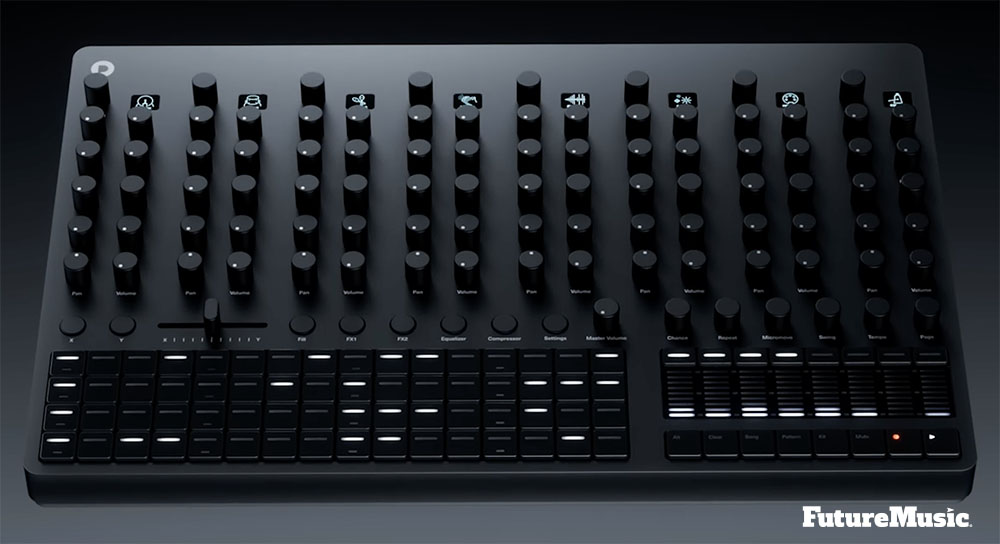
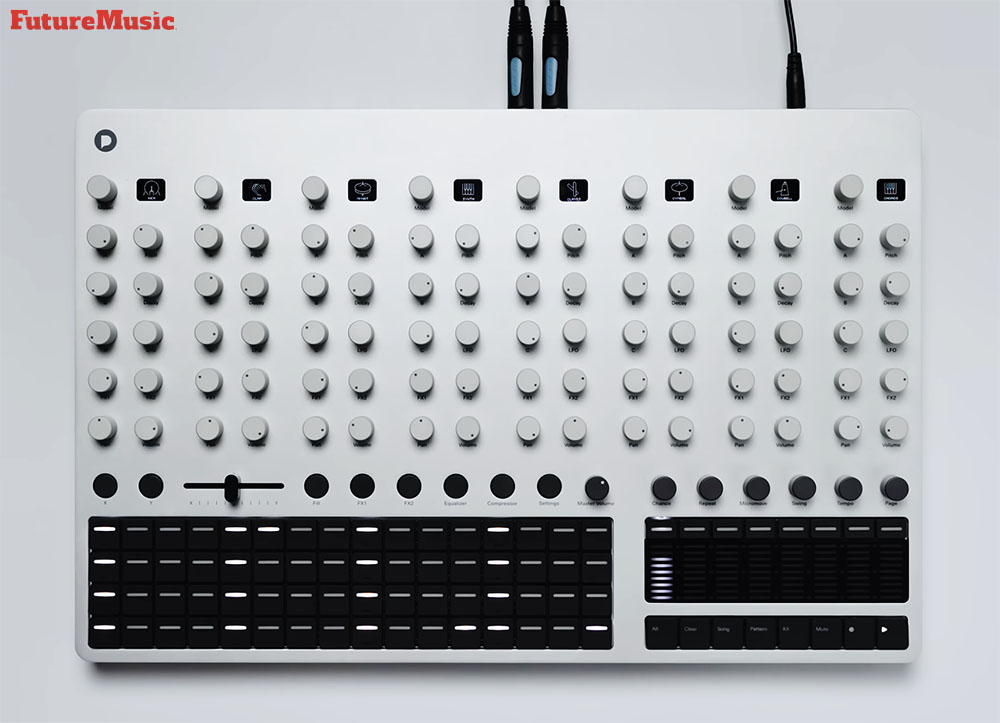
The innovators at Polyend made a huge splash at Superbooth when they announced a new flagship drum machine dubbed Drums. This exciting addition to the Polyend arsenal won’t arrive until the fall, but the gorgeous industrial design and extensive feature set has garnered a lot of positive momentum. In fact, Drums is built around a single-piece aluminum body, with tasty metal knobs and high-end components throughout.
Polyend Drums. features four analog voices built on modern SSI chips that claim to create a dense, classic tone with modern flexibility. Each stacks dual analog VCOs, a dedicated noise source, and additional digital oscillator for hybrid layering or precise FM modulation. Each shaped through a multimode analog filter and VCA, giving you everything from tight percussion to evolving synth textures.
Polyend Drums.

The easiest way for electronic musicians to get their music onto Spotify, Apple Music, iTunes, Amazon Music, Tidal, Instagram, Facebook, TikTok, Pandora, Twitch & much more! Click the banner above or the Go Button to save 7% off of your signup! GO!
Multiple analog and digital synthesis methods, sample-based instruments, and eight independent LFOs give you the core tools for creating and modulating drum sounds. With over forty instruments, each containing its own sub-mode mutations, you get hundreds of options to choose from. Drums is designed for real-time control. Use the X0Y fader to morph kits, trigger fills instantly, and switch between patterns or sound kits without stopping playback. Key parameters stay close, so changes can be made while the pattern is running.
Four analog voices, several digital synthesis engines and samples combine for endless possibilities…
Drums includes three dedicated effects groups. Send effects for shared processing. Insert effects for individual tracks. A master chain for the final mix. Inserts can be sequenced per track, so effects become part of the rhythm rather than something added at the end. Drums is designed to connect with the devices around it. Individual audio outputs allow further processing, MIDI keeps everything in time, and the audio input lets you shape external sounds with its effects processor.
We asked Piotr Raczynski, the brilliant mind behind Polyend, about their new flagship drum machine:
After Step, what was the motivation for Polyend to create Drums?
Piotr Raczynski: Step was designed with a very specific context in mind. It is mainly aimed at guitarists, so we had to keep it focused. It is a sequencer, but stripped of many performative features, because it has to work while someone is playing guitar. That makes it a very different kind of instrument.
With Drums, the motivation was almost the opposite. We wanted to build the ultimate drum machine. No cutting corners.
That meant maxing out every part of the experience. The audio engine runs at 96 kHz, with 24-bit conversion and 32-bit floating point internal processing. The analog side is built around complete analog voices, not just simple analog flavor. The design is also pushed much further.
But the biggest challenge was the workflow. We wanted Drums to be extremely deep, with a powerful sequencer and a lot of sound design potential, but still feel light and immediate in use. Not simple because it is limited, but simple because the complexity is organized in a way that makes sense. So in a way, Drums is a completely different philosophy from Step. Step is focused and intentionally reduced. Drums is Polyend with no limits.
With so many new drum machines out right now, how did you go about making Drums unique?
Piotr Raczynski: There are many great drum machines out there, but they usually fall into one of two categories. Some are simple to use, but not very deep. They are immediate, but you quickly hit their limits. Others are incredibly deep, but also incredibly complicated. Manuals, menus, screens, modes, shortcuts. You spend too much time managing the machine instead of making music.
With Drums, we wanted to keep the depth, but remove as much friction as possible. That is why it combines analog voices, digital instruments, samples, advanced sequencing, effects, performance tools, and deep sound design in one instrument, but with a workflow that stays clear and immediate. You should be able to start creating without thinking too much, but still have a lot to discover once you want to go deeper.
The industrial design is – again – off the charts! From the micro screens depicting the instruments, to the beautiful meters, how did these touches make it into the final design?
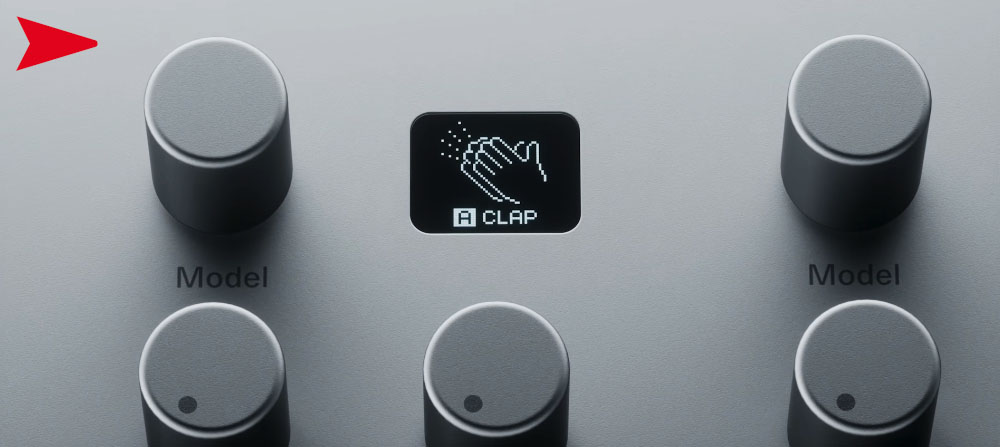
Piotr Raczynski: The industrial design was not added at the end to make it look expensive. It is part of the concept. The body is made from a single piece of aluminum. The knobs and buttons are custom made for us, also from aluminum. We chose high-end components throughout, from pots and encoders to keys and screens, because the tactile experience matters a lot in an instrument like this.
The micro screens came from a very simple problem: with a machine this flexible, you need to know what each track is doing without getting lost. If a track can be an analog voice, a digital synth, or a sample instrument, the interface has to make that obvious. The small screens help each track feel like its own instrument.
The meters are similar. They are functional, but they also give the machine a sense of life. One quick look tells you which tracks are active, which ones are silent, and what is muted. That is important on stage, but just as useful while writing, because you can understand what is happening without breaking the flow.
In general, our approach was to make the depth visible, but not overwhelming. Every visual element should help you understand the instrument faster. Nothing is there just as decoration. For us, good industrial design is not only about beauty. It is about trust. When you touch Drums, we want you to feel that it was built with care, precision, and intention. That feeling changes the way you approach an instrument.

Native Instruments Absynth 6 Review
Native Instruments has successfully rebooted Absynth in many positive ways and laid the foundation for the next generation of users. Native Instruments Absynth 6 Review
Polyend Drums Features & Specs:
- 32-bit floating point at 96kHz internal processing
- 24-bit/96 kHz DAC for output
- 24-bit/96 kHz ADC for input
- 32 GB of internal storage
- 2 × 1/4″ audio out jacks
- 8 × 1/4” individual track output jacks
- 1 × 1/4″ stereo headphone jack
- 2 × 1/4″ audio in jacks
- 1 x 1/8″ MIDI In jack
- 1 x 1/8″ MIDI Out jack
- 1 x 1/8″ MIDI Thru jack
- USB C
- Height (w/ knob): 1.69 inches (4.3 cm)
- Width: 17.56 inches (44.6 cm)
- Depth: 11.50 inches (29.2 cm)
Polyend claims that Drums contains their most advanced and intuitive sequencing system yet. Eight tracks with deep per-track control, probability, micro-timing, pattern chaining and generative tools move you beyond simple stepped playback into expressive composition. Drums is fueled by a dual-core main CPU, with auxiliary processors handling peripherals and analog control. Internal audio processing is done in 32-bit floating point at 96kHz, with 24-bit/96 kHz DAC and ADC conversion for audio input and output.