Reliq Instruments has released a polyphonic sequencer with enough features and connectivity to win any music production Boss Battle. Reliq claims that their new product “combines a polyphonic sequencer, a fully analog matrix mixer, and the most extensive connectivity in an instrument,” but also has deep DAW integration. It was “designed to make an entire studio play as one.”
But what exactly does that mean?
According to Kyriakos Charalampides, founder of Reliq, it all “started as a DIY project for personal use between a group of friends who played music together. Back then, most of us were improvising and gigging together, and every time someone brought a new piece of gear, we’d spend ages tuning, syncing clocks, or troubleshooting setups instead of making music.”
“We kept talking about this fantasy instrument that could control everything,” Charalampides continues, “something that united all our tools so we didn’t have to think in terms of analog vs digital, in-the-box vs hardware, Eurorack vs standalone. We just wanted to use anything that sounded good without the technical pain.”
Reliq Instruments

The easiest way for electronic musicians to get their music onto Spotify, Apple Music, iTunes, Amazon Music, Tidal, Instagram, Facebook, TikTok, Pandora, Twitch & much more! Click the banner above or the Go Button to save 7% off of your signup! GO!
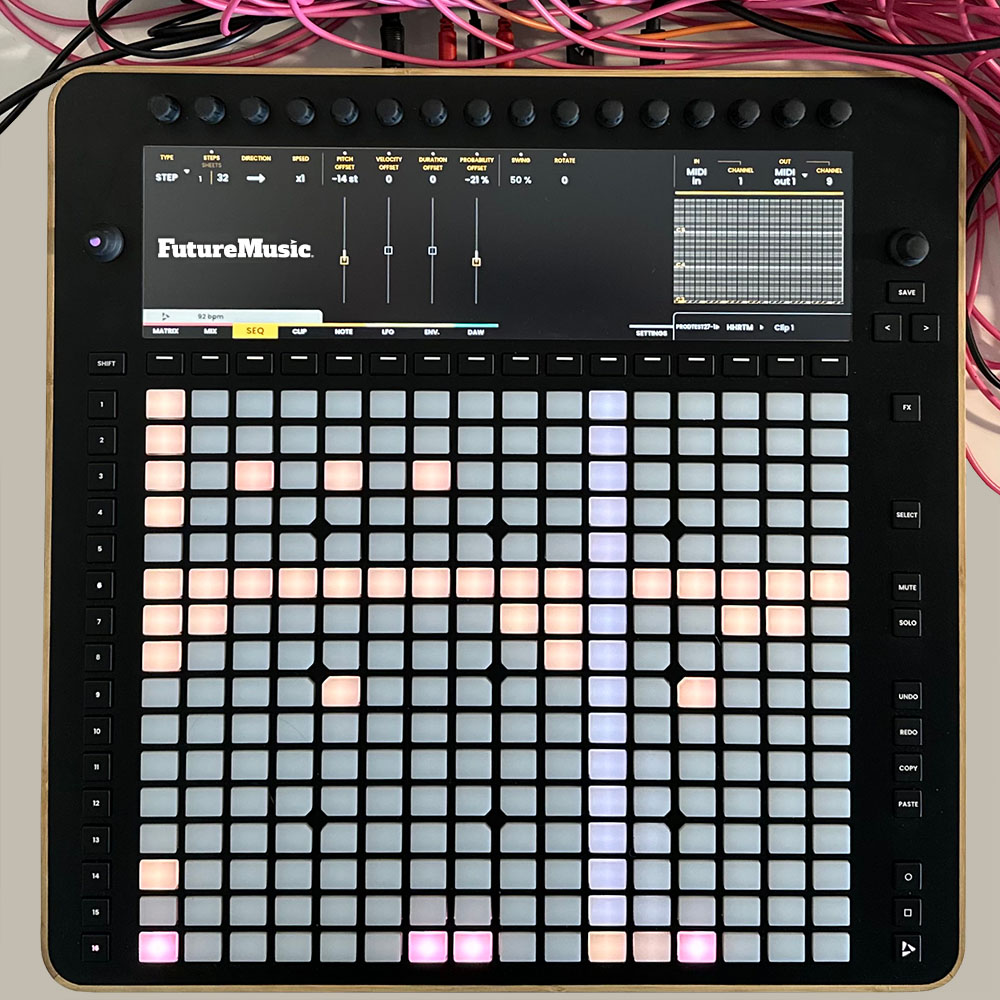
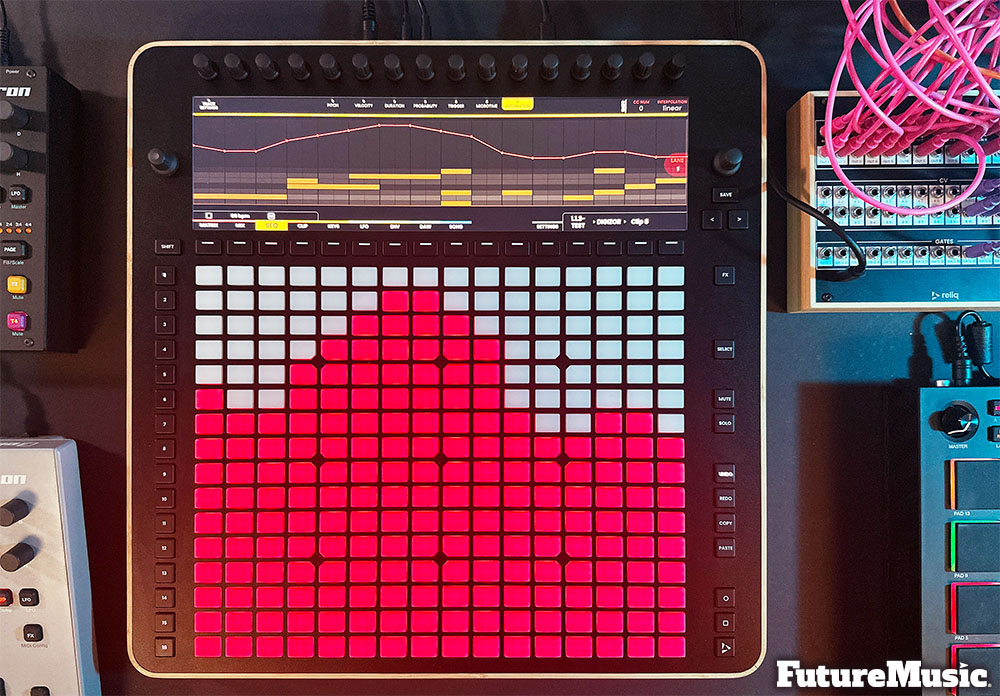
Reliq claims their Jedi sequencer is the “largest and most immediate surface ever built for sequencing and control,” consisting of 256 grid buttons, 36 navigation buttons so that every action has its own control without any menu diving, 16 encoders, and one joystick encoder for direct access to parameters, zoom and timeline navigation. Reliq features a color display with 1920×515 resolution, allowing it to showcase tracks, clips, routings and automation simultaneously.
With all that power comes great connectivity…
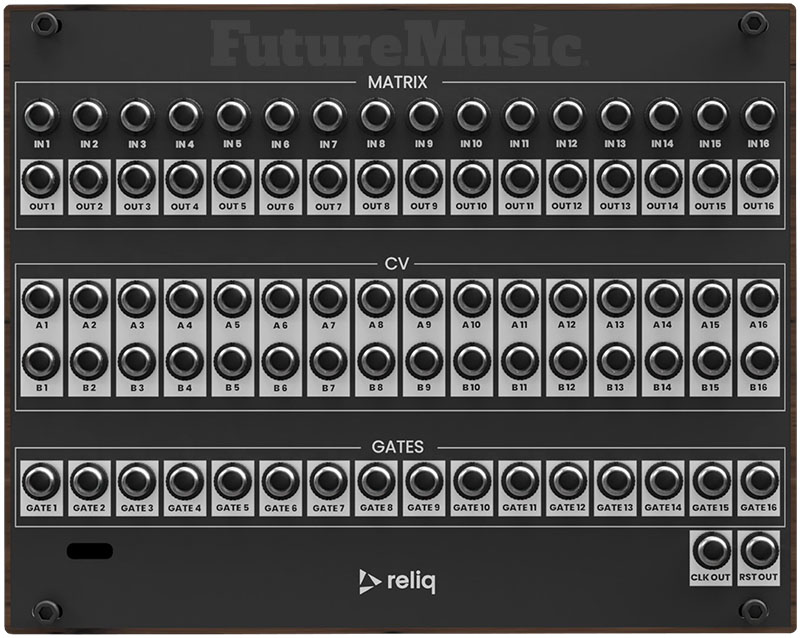
With all that power comes great connectivity and Reliq did not hold back. 16 ins / 16 outs, 32 CVs, 16 gates, clock and reset outs; 3× MIDI out, 1× MIDI in; USB MIDI, USB host, Wi-Fi, and Bluetooth. How did they get all that into one unit? They didn’t. The Reliq has a breakout box (included) that has houses all those glorious connections and simply attaches to the main unit via USB-C.
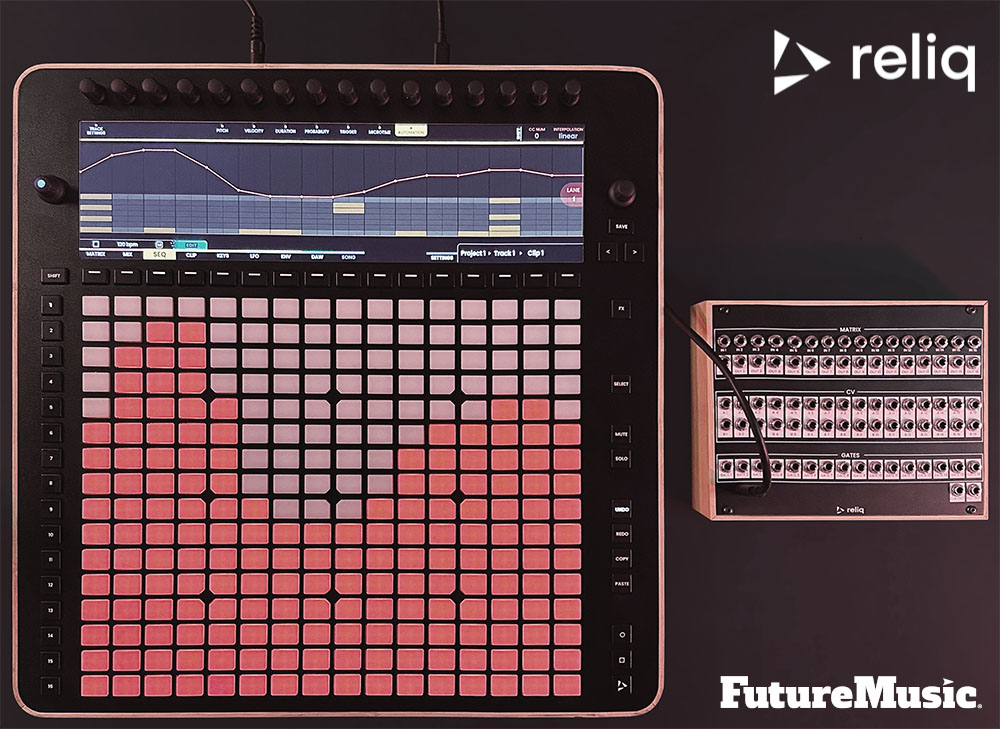
Please Note: These were the best images that Reliq provided at press time. We’ll update this page when better photography becomes available.

Polyverse Filterverse Review
Polyverse’s Filterverse is a multi-filter plug-in for Mac and PC that is built for exploration. Is it worth the your money? Find out! Polyverse Filterverse Review
Reliq’s Analog Matrix Mixer – or what they call an instrument inside the instrument – is a fully analog matrix and mixer that works with audio, CV, Eurorack, pedals and synths. There is amplitude control for every input and output with names shown directly on screen, plus 128 routings per project.
The sequencer can have 16 tracks visible at once with 8-voice polyphony per track, and up to 32.768 steps per pattern. 128 clips per track/project with clip follow-ups are available with multiple modes and performative parameters, including transposition, probability, trigger and swing. Each track can have an arpeggiator, humanizer, randomizer, quantizer and more. Each track can have eight automation lanes with interpolation. Reliq also asserts that their MIDI sync engine is one of the most stable out there with +/- 3us Clock float.
But Reliq wasn’t finished, the device also includes 16 LFOs, which can be tempo-synced or free up to 60 Hz, with wave morphing, offsets and phase control. Sixteen ADSR envelopes are also at your disposal with linear/exponential, sequenceable offsets and up to 128 slots of modulation per project.
Additional Reliq Features:
- Control up to 64 instruments at once: Scale your sessions with track counts far beyond conventional sequencers.
- Probability per voice: Introduce variation, chance, and evolving patterns into sequences.
- Matrix Sequencer: Animate signal routing itself with a dedicated sequencer track.
- Modulation Stacking: Combine LFOs and envelopes on the same destination.
- Extensive Piano Roll Mode: Edit melodies and automation directly on Reliq’s display.
- Microtiming per step: Shift events off the grid for groove and precision feel.
- Euclidean Track Type: Generate evenly distributed rhythms with rotation and fills.
- Automation Interpolation: Smooth curves or stepped values between points.
- High-resolution recording: (768 PPQN) Capture every nuance of timing and performance.
- Follow-Up Actions: Clips, LFOs, and envelopes can jump to next, previous, or random, with probability.
- External MIDI Mapping: Assign external controllers to internal functions.
- Undo / Redo functions: Move freely between ideas without fear of losing work.
- Groups in the Matrix: Organize inputs/outputs with color-coded groups and multi-channel connections.
- Overdub & Quantize : Real-time recording tools for fluid capture and correction.
- Project Management: Autosave, categories, recovery mode, and autoload options.
- Parameter locking: Assign unique parameter values per step for detailed sequencing.
- Routings Recall: Save and recall entire routing states instantly.
- Scales & Root Note Selection: Lock sequences to scales and shift root notes in real time for harmonic control.
- Piano Roll Views: Pitch, velocity, probability, trigger, duration, microtime, automation — each editable in its own view.
As you can see, the Reliq sequencer is one deep product with a feature set that clearly can’t be completely covered without spending extensive time with the unit to unearth everything that it’s capable of. In that regard, we reached out to Kyriakos Charalampides, founder of Reliq, to learn more about the sequencer and its development.
FutureMusic: It looks like the Reliq concept grew organically from its original idea…
Charalampides: The first prototype was built purely for ourselves, but when friends and colleagues started visiting our studios, they got really curious. That’s when the project slowly grew — we started experimenting with early hardware ideas together with Michele, and then Zois, who had experience in design and user experience, joined in. Later Giuliano brought his programming experience, and finally Simon from Sim’n Tonic, who was already seasoned technically, started helping more and more with the deeper technical aspects. From there it kept evolving naturally, with each of us shaping it from our own perspective as musicians.
At the beginning of the pandemic we decided to see if we could actually turn it into a production device. It took almost five years from that point — but here we are.
FutureMusic: You said it was developed by a small, independent team of musicians, but it appears to be a very complicated and advanced unit. Are these aforementioned musicians also engineers and programmers? If not, how did the project come together?
Charalampides: For sure, Reliq is a very complex piece of technology. We’re all musicians, but we’d been dabbling in engineering, programming, and industrial design for years — building small DIY instruments, writing our own software synths, experimenting, and learning by doing.
When we committed to Reliq, we had to learn fast, and adapt even faster. That initial naivety actually helped — we kept finding creative ways to solve problems that more experienced engineers and advisors warned would be really challenging.
We’ve learned a huge amount along the way and became much stronger technically. Nowadays, we spend most of our time as engineers and designers, and only occasionally as musicians.
FutureMusic: What was the hardest part of developing the Reliq?
Charalampides: There were challenges at every stage — technical design, software, and UI decisions — but the whole team agrees that the hardest part was the first production run.
Manufacturing is always unpredictable, and in recent years it’s become even more so. Getting every single detail exactly as we designed it required endless effort. We spent an enormous amount of time making sure every component and process met our standards — it truly felt like a never-ending story.
FutureMusic: What was the biggest surprise that your team encountered once it hit the market?
Charalampides: Without a doubt, the community response. We hoped a few people might find Reliq interesting, but the level of support we received — from the crowdfunding campaign to our Discord community — was far beyond what we expected.
Then came the creative surprises: people using Reliq as a live mixer, in hybrid rigs, with pedal chains, and in experimental setups we never imagined. Seeing musicians push it in all these directions has given us so many new ideas for how to keep evolving it.
FutureMusic: Is the Reliq constructed in the Netherlands by hand? Or overseas by a manufacturer?
Charalampides: Reliq is assembled and tested in the Netherlands, but its internal components come from all over the world. Over the past few years, we’ve built strong relationships with several specialized factories in Asia and Europe that handle parts such as circuit boards, metalwork, and displays.
Final assembly, calibration, and quality control take place here in the Netherlands through a local partner we’ve been working closely with since the prototype stage. This approach lets us combine the precision and efficiency of global manufacturing with the hands-on care that the design requires. It also allowed us to personally check every unit ourselves during the first production round and iterate quickly to make sure every unit shipped according to the design standards.
FutureMusic: What’s next for your company? Will there be any more products? Or will you be solely focusing on the Reliq?
Charalampides: Right now our full focus is on Reliq. We spent five years building the architecture and hardware specifically to support a long development cycle, and we’ve only tapped into a fraction of what it can really do. At the moment we’re releasing monthly updates, and the plan is to keep that momentum going for quite some time.
This phase is the fun part — expanding the software, adding new features, and refining the workflow. There are future ideas on the horizon, but for the foreseeable future, Reliq remains our main focus.